The New Era of Tech-Enabled Scams
Updated:

It may seem daunting to keep up with technology these days. As it evolves, it seems to create more opportunities for criminals to exploit consumers. The scale of the problem is huge, and it will take us all working together to turn the tide.
What is Tech-Enabled Fraud?
Tech-enabled fraud, also known as cybercrime or internet crime, includes any illegal activity that involves the use of the internet or other digital technologies to communicate false or fraudulent representations to consumers. It includes a wide range of illegal activities, including identity theft, phishing, and social engineering techniques used by criminals to deceive victims into providing personal information or money.
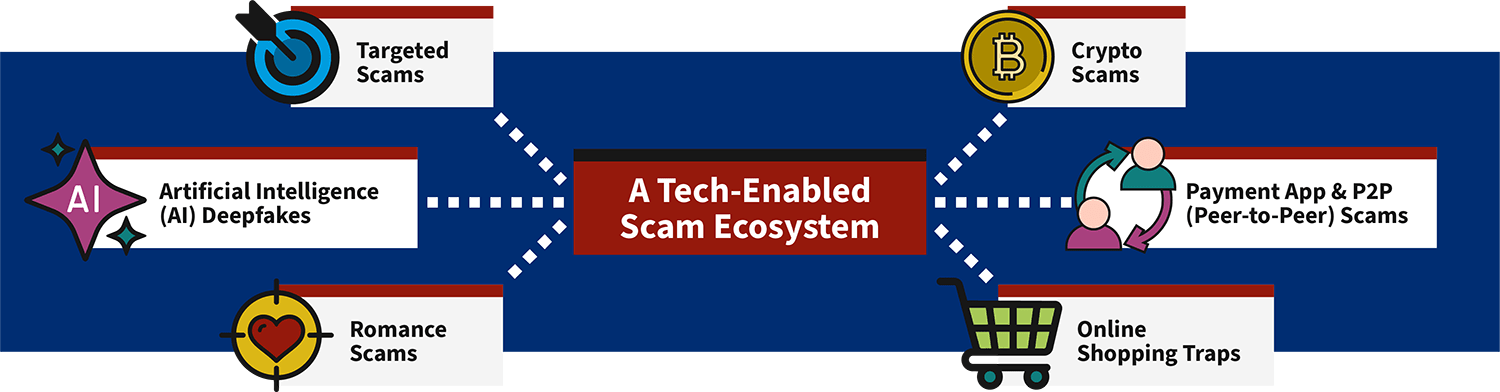
Common Forms
 Targeted Scams: You might not realize it, but you’ve likely been a target of a scam or fraud. Maybe you received a phone call from a number you didn’t recognize, a text message from someone claiming to be an old friend, or an email for a service that you never signed up for. These are examples of targeted scams designed to get your attention and then steal your money. Scammers often target older adults since they may not be aware of how the latest technologies are being used in scams and fraud. However, targeted scam techniques are used against consumers of any age.
 Crypto Scams: Investment scams can usually be quickly identified by a “too good to be true” offer, often guaranteeing high returns at very low risk. Investments involving new technologies, such as crypto, are especially ripe for fraudsters who exploit the novelty of crypto to prey on unsuspecting victims. Even where fraud is not present, crypto investments can be volatile and unpredictable, and the company holding your crypto assets may go bankrupt. We’ve developed these resources to help navigate the complexities of crypto transactions:
- Crypto Scam Tracker
- Crypto ATM Scams: Don’t Let Fraudsters Drain Your Wallet
- Watch Out for Crypto Affinity Fraud
- How to Report Crypto Scams
 Artificial Intelligence (AI) Deepfakes: Many legitimate companies use AI to help us in our daily lives. Unfortunately, because AI is a relatively new and developing technology, scammers are also increasingly using these tools to harm and deceive. AI Deepfakes are videos, audio, or images that have been manipulated using AI to seem real to the human eye and ear. Fraudsters may use AI deepfake techniques to influence their victims to take certain actions or to steal their money.
 Payment App & Peer-to-Peer (P2P) Scams: A P2P payment is a digital money transfer made between two individuals without the need for a traditional banking system. Instead, these transactions happen online using a website or mobile app. P2P scams involve fraudulent activities using peer-to-peer payment platforms, where scammers exploit the convenience and trust in these services to trick users into losing money or giving up personal information.
 Romance Scams: Scammers prey on innocent people with not-so-romantic intent. They troll for victims on dating sites, chat groups, and social media and use the information you share online to win your trust, or love over time. Then, they ask you to help them out financially in an emergency or to invest in an amazing opportunity. As soon as money is exchanged, they disappear without a trace.
 Online Shopping Traps: Whether you’re shopping for clothing, electronics, video games or event tickets, spoof websites, companies, and social media campaigns are out there fraudulently promoting them. Scammers rely on urgency and excitement — counting on you being in a rush and less likely to double-check if that deal really is too good to be true.
Tools to Protect Yourself
While today’s consumer protection tools aren’t foolproof, they’re critical in combatting scams and fraud. We’ve developed these tools to help keep consumers safe from tech-enabled scams and fraud:
Submit a Complaint
Help us help you. The sooner you file a report about fraud or scams; the more likely criminals can be traced and your assets recovered. If you believe you’ve been the victim of a tech-enabled scam, report it to law enforcement, then submit a complaint, especially if it involves crypto transactions.
You can also consider sharing your experiences with our consumer protection partners:
Help Us Fight Tech Fraud
We need your help! We want to know about your experiences with tech-enabled fraud. How were you targeted – via email, fake texts, or deceptive pop-ups? We also want to hear your ideas on how to stop this type of activity. Please take our survey and pass it on to others who may be interested.